Sermorelin Therapy: A Natural Approach
to Growth Hormone Optimization
How sermorelin stimulates your body's own growth hormone production — safely, predictably, and without the risks of direct HGH therapy.
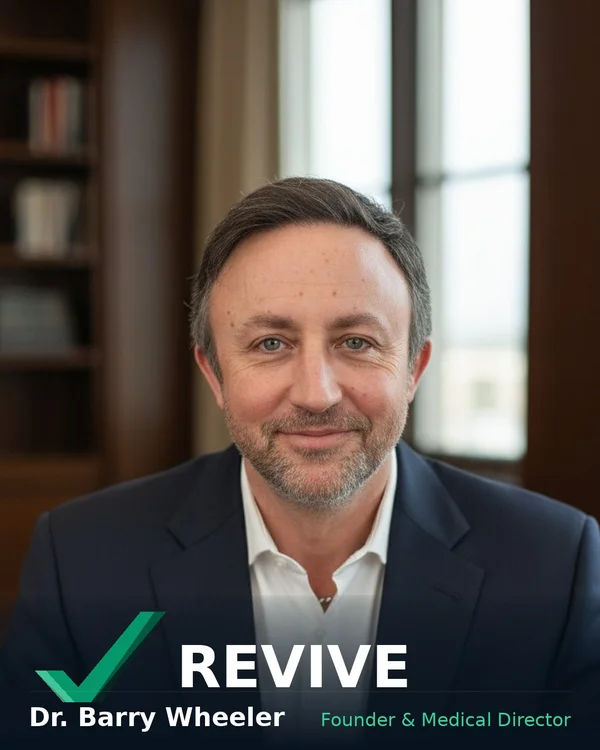
Growth hormone (GH) declines with age in men just as testosterone does — and the effects overlap in frustrating ways. Reduced muscle mass, increased body fat, worse sleep, slower recovery, and declining vitality are hallmarks of both low T and low GH. Sermorelin offers a way to address the growth hormone side of this equation without the medical and legal complications of direct human growth hormone administration. Here's how it works and who benefits most.
How Sermorelin Works: The GHRH Analog Advantage
Sermorelin is a synthetic analog of growth hormone-releasing hormone (GHRH) — the signal your hypothalamus naturally sends to your pituitary gland to trigger growth hormone secretion. It consists of the first 29 amino acids of the 44-amino acid GHRH molecule, which is the biologically active portion responsible for binding to pituitary receptors.
When you inject sermorelin, it travels to your pituitary gland and stimulates it to produce and release your own growth hormone. This is a fundamentally different mechanism than injecting synthetic HGH directly. Sermorelin works through your body's normal regulatory systems — your pituitary still controls the pulse timing and amplitude, and the natural negative feedback loops remain intact.
This means sermorelin cannot over-stimulate GH production to supraphysiologic levels the way exogenous HGH can. Your pituitary acts as a natural governor. The result is a restoration of more youthful GH pulsatility rather than the constant, unregulated HGH elevation that can occur with direct HGH use.
The Benefits Men Experience
Growth hormone and its downstream mediator IGF-1 (insulin-like growth factor 1) have broad effects throughout the body. When GH is restored toward optimal levels, men typically experience improvements across several domains:
- Body composition: Reduction in visceral and subcutaneous fat; increase in lean muscle mass over 3–6 months
- Sleep quality: GH is primarily secreted during deep (slow-wave) sleep; sermorelin tends to deepen sleep architecture, often the first benefit men notice
- Recovery: Faster muscle repair after exercise; reduced soreness; tissue healing improvements
- Skin and connective tissue: Improved skin thickness and elasticity; some men report joint comfort improvements
- Energy and vitality: Generalized increase in drive and stamina, distinct from the testosterone-driven motivation most men are familiar with
- Cognitive function: GH and IGF-1 receptors are present throughout the brain; many men report improved mental clarity
Results are gradual. Unlike testosterone, which men often notice within 2–4 weeks, growth hormone optimization via sermorelin typically takes 2–3 months before body composition changes become visible and 4–6 months for maximal benefit. Patience is part of the protocol.
Sermorelin vs. Direct HGH: Why the Distinction Matters
Human growth hormone (somatropin) is FDA-approved for specific conditions including adult growth hormone deficiency — but prescribing it for anti-aging or body composition purposes is off-label and legally precarious. The FDA has specifically prohibited the off-label prescription of HGH for anti-aging since 1990. Possession without a valid prescription is a federal crime under the Anabolic Steroid Control Act.
Beyond legality, direct HGH carries real clinical risks at therapeutic doses. Supraphysiologic or continuously elevated GH levels can cause fluid retention (edema, carpal tunnel syndrome), insulin resistance, joint pain, and — with chronic use — potentially increased cancer risk through sustained IGF-1 elevation.
Sermorelin avoids these concerns. It's a doctor-prescribed compounded peptide, used off-label for growth hormone optimization in adults — a legally distinct and clinically appropriate category. The self-regulating nature of pituitary control prevents the extreme GH elevations associated with direct HGH risks.
Dosing, Administration, and What to Expect
Sermorelin is administered as a subcutaneous injection, typically once daily at bedtime. Nighttime dosing aligns with the body's natural GH secretion pattern — GH pulses are largest during the first few hours of sleep. Injecting sermorelin before sleep amplifies this natural pulse rather than creating an artificial one.
A typical sermorelin protocol looks like:
- Dose: 200–300 mcg nightly (individualized based on weight and IGF-1 levels)
- Cycle: 5 days on, 2 days off (to prevent receptor desensitization) or continuous depending on protocol
- Duration: Minimum 3–6 months for meaningful body composition changes; many men continue indefinitely
- Monitoring: IGF-1 levels checked at baseline, 3 months, and 6 months; fasting glucose monitored
Sermorelin is sometimes combined with GHRP (growth hormone releasing peptides) such as ipamorelin to amplify GH release through a complementary mechanism. The CJC-1295/ipamorelin combination is one common protocol — though sermorelin alone is effective for most men.
Who Qualifies for Sermorelin Therapy?
Sermorelin is appropriate for adult men who have evidence of growth hormone deficiency or decline, typically indicated by:
- Low or low-normal IGF-1 levels (below 150–200 ng/mL in men over 40)
- Symptoms consistent with GH deficiency: poor recovery, visceral fat accumulation, sleep disruption, fatigue
- Age 35 and older (GH declines most meaningfully after 35)
- No contraindications: active cancer, untreated sleep apnea, active intracranial hypertension, or pituitary disease
Men who have had cancer should discuss sermorelin therapy carefully with their doctor. Elevated IGF-1 is associated with some cancer risks, and any growth hormone stimulation in a man with active or recent malignancy requires a risk-benefit discussion.
Sermorelin as Part of Your Optimization Protocol
For men already on testosterone replacement therapy who want to take the next step in optimization, sermorelin is a natural complement. Testosterone and growth hormone work synergistically on body composition — testosterone preserves and builds muscle, while GH and IGF-1 promote fat metabolism and tissue repair. Men who add sermorelin to their TRT protocol often experience body composition improvements that neither treatment achieves alone. Talk to your doctor about whether sermorelin therapy belongs in your protocol.
Interested in Growth Hormone Optimization?
Schedule a consultation to discuss sermorelin therapy and whether it's right for your optimization goals. Lab work included.
Free Consult →Prefer to talk it through?
Book your free consult online anytime.