Kaiser Permanente TRT
Coverage in WA
How Kaiser's integrated model works for TRT patients, its limitations, and why some Kaiser members choose out-of-network care.
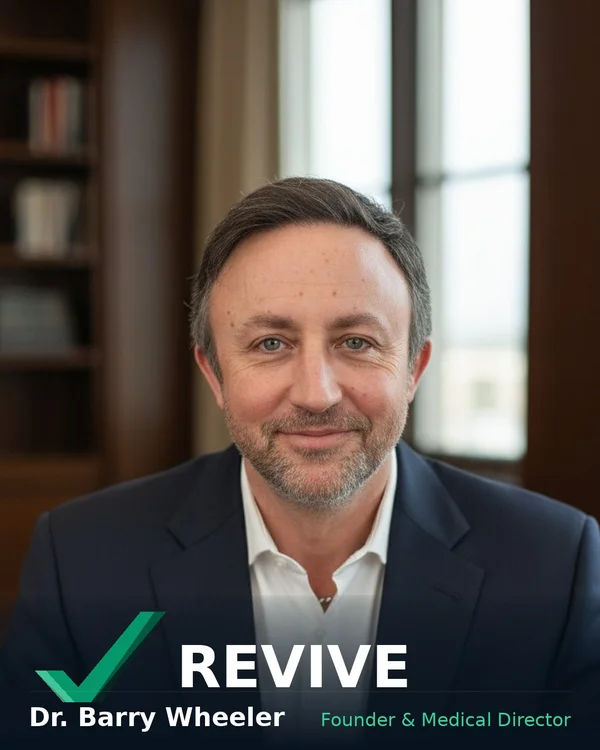
Kaiser Permanente is different from every other insurance plan in Washington — and that difference has significant implications for men seeking testosterone replacement therapy. Unlike Premera, Regence, or UnitedHealthcare, Kaiser operates as an integrated health system where your insurance, doctors, and pharmacy all exist under one roof. This integrated model has real advantages for routine care, but it creates unique challenges for specialized treatments like TRT.
At Revive Low T Clinic, we see a growing number of Kaiser members who come to us after struggling to get adequate TRT care within the Kaiser system. This guide explains exactly how Kaiser handles testosterone therapy, where the limitations exist, and how Kaiser members can access TRT care — whether through Kaiser or alongside it.
Important distinction: This article discusses how Kaiser Permanente covers testosterone medication at your pharmacy — which is the primary insurance benefit for Revive patients. Revive Low T Clinic is a cash-pay practice. Office visits are paid directly to Revive.
For labs, use your insurance (the lab bills your insurer, not Revive) or pay our discounted price (about $40). Coverage is not guaranteed.
Because Kaiser is a closed system, Kaiser may require their own labs drawn at KP facilities for any claims processed through your Kaiser plan. Patients may submit itemized receipts toward their out-of-network deductible, but reimbursement is not guaranteed. See how billing works at Revive →
How Kaiser's Integrated Model Works
Kaiser Permanente is both an insurance company and a healthcare provider. When you have Kaiser insurance, you receive medical care from Kaiser doctors at Kaiser facilities, and you fill prescriptions at Kaiser pharmacies. Everything is in-house. This is fundamentally different from plans like Premera or Regence, where you choose your own doctor and pharmacy.
For TRT patients, this means several things:
- Your TRT must be prescribed by a Kaiser doctor — outside prescriptions cannot be filled at Kaiser pharmacies.
- Lab work must be done at Kaiser labs — they typically don't accept outside lab results for treatment decisions.
- Referrals are required for specialists — if your PCP won't prescribe TRT, getting to an endocrinologist involves a referral process that can take weeks or months.
- Formulary is Kaiser-specific — Kaiser maintains their own drug formulary, separate from other insurers.
What Kaiser Covers for TRT
When testosterone therapy is prescribed within the Kaiser system, it's generally well-covered. Kaiser's internal formulary includes FDA-approved testosterone formulations:
- Testosterone cypionate (injectable): Covered at the generic copay tier — typically $5–15 per fill at a Kaiser pharmacy.
- Testosterone enanthate (injectable): Also covered at the generic tier on most Kaiser plans.
- Testosterone topical gel: Covered, though may require step therapy (trying injectables first) or prior authorization.
- Lab work for diagnosis and monitoring: Fully covered with no additional cost when ordered by a Kaiser doctor and drawn at a Kaiser lab. Note: Kaiser does not typically accept outside lab results for treatment decisions. At Revive, follow-up labs are drawn at our clinic: use your insurance, or pay our discounted price (about $40). Coverage is not guaranteed.
On paper, Kaiser's TRT coverage looks solid. The challenge isn't whether testosterone is covered — it's whether you can actually get it prescribed, and whether the level of care meets the standard that TRT requires.
Kaiser's Prior Authorization Criteria for TRT
When Kaiser does prescribe TRT, it is governed internally by the Criteria-Based Consultation Prescribing Program. This program defines exactly what documentation is required before a Kaiser doctor can initiate testosterone therapy. Understanding these criteria helps explain why many Kaiser members encounter friction in the process — and why lab work is essential.
Kaiser requires all four of the following before TRT is approved:
- Two low morning testosterone draws: Total testosterone must be below normal on two separate morning blood draws (collected before 10 AM). A single low result is not sufficient.
- LH, FSH, and prolactin panel: These pituitary hormones must be tested to distinguish primary from secondary hypogonadism and to rule out a prolactinoma (pituitary tumor) as the underlying cause.
- DRE + PSA (if over 50): Men over 50 must have a documented digital rectal exam and PSA test within the last 12 months before TRT can be initiated.
- Hematocrit below 50%: Baseline hematocrit must be documented as less than 50% before starting TRT, as testosterone can increase red blood cell production.
BMI ≥ 30 additional requirement: If your BMI is 30 or higher, Kaiser requires BOTH total testosterone AND free testosterone to be below normal — not just one. This is stricter than most other carriers. Revive's 51-biomarker panel tests both markers as a standard part of every first visit.
These are legitimate clinical criteria — and in fact, the same markers our team at Revive routinely collects. The difference is that at Revive, these labs are part of your first-visit panel by default. Kaiser often requires multiple separate appointments to collect all four criteria, each adding weeks to the timeline.
The Real-World Challenges With Kaiser TRT
We hear the same stories from Kaiser members consistently. While Kaiser excels at primary care and routine health management, testosterone therapy often falls through the cracks. Here are the challenges men actually experience:
1. Conservative Prescribing Culture
Kaiser's doctor culture tends to be conservative when it comes to testosterone therapy. Many Kaiser PCPs are reluctant to prescribe testosterone, even when lab work clearly shows hypogonadism. They may suggest lifestyle changes first, want to monitor for another 6–12 months, or refer you to endocrinology rather than initiating treatment themselves. None of this is inherently wrong — but for men who are symptomatic and have confirmed low testosterone, it creates unnecessary delays.
We frequently see Kaiser members who have been told their testosterone is "low normal" or "within range" when their total T is 280–350 ng/dL — levels that are technically within the lab's reference range but well below optimal and clearly associated with symptoms. Different doctors have different thresholds for treatment, and Kaiser's institutional approach tends to set a higher bar for initiation.
2. Limited Lab Panels
Kaiser's standard testosterone evaluation typically includes total testosterone, CBC, and a basic metabolic panel. While this meets minimum diagnostic criteria, it misses critical markers that directly affect treatment decisions:
- Free testosterone: Often not tested. Total T can be normal while free T is clinically low — this is especially common in men over 40 with elevated SHBG.
- SHBG (Sex Hormone Binding Globulin): Rarely ordered at Kaiser. This protein determines how much of your total testosterone is bioavailable.
- Estradiol (E2): Critical for monitoring on TRT to prevent estrogen-related side effects. Not routinely tested at Kaiser.
- LH and FSH: Important for distinguishing primary from secondary hypogonadism. Not always included in Kaiser's initial workup.
- Prolactin: Elevated levels can indicate pituitary issues causing low T. Rarely tested unless specifically requested.
At Revive, our 51-biomarker panel includes all of these markers — and 40+ more — because you can't properly diagnose or manage TRT without the full picture.
3. Long Wait Times for Endocrinology
If your Kaiser PCP refers you to endocrinology, expect to wait. Kaiser endocrinology appointments in the Puget Sound region typically have wait times of 4–12 weeks. Once you're seen, the endocrinologist may order additional labs (another 2–3 weeks for results), then schedule a follow-up to discuss treatment (another 2–4 weeks). The total timeline from initial PCP visit to actually starting TRT through Kaiser can easily stretch to 3–6 months.
Compare that to Revive: your first visit includes doctor consultation, labs, and — if TRT is indicated — a prescription the same week. Most patients start treatment within 7–10 days of their first appointment.
4. Closed Pharmacy System
Kaiser's closed pharmacy system means you can only fill prescriptions at Kaiser pharmacies. This has two practical implications for TRT patients:
First, you can't fill an outside prescription at Kaiser. If a non-Kaiser doctor (including Revive) prescribes testosterone, you can't take that prescription to a Kaiser pharmacy and use your Kaiser drug benefit. You'd need to fill it at a regular pharmacy and pay the full cash price.
Second, Kaiser pharmacy hours and locations may be less convenient than having the option to fill at any Walgreens, Costco, or Fred Meyer near your home or office. Kaiser pharmacies are located at Kaiser facilities, which may not be close to where you live or work.
Key distinction: Kaiser covers TRT when prescribed by a Kaiser doctor. The limitation isn't coverage — it's access. Getting diagnosed, getting a prescription, and getting optimal care within Kaiser's system is the challenge most men face.
Why Some Kaiser Members Go Out-of-Network for TRT
A significant number of Kaiser members in Washington ultimately seek TRT care outside the Kaiser system. The reasons we hear most often:
- Frustration with the referral process: Months of waiting for endocrinology appointments while symptoms persist.
- Inadequate lab work: Total testosterone tested, but free T, SHBG, and estradiol ignored — leading to an incomplete diagnostic picture.
- "Normal range" dismissal: Being told levels are "normal" when they're in the 200–350 ng/dL range with clear symptoms.
- Cookie-cutter treatment: One-size-fits-all dosing without the individualized optimization that TRT requires.
- Lack of TRT expertise: PCPs who prescribe TRT but don't monitor estradiol, hematocrit, or adjust protocols based on symptom response.
- Limited follow-up: Annual check-ins instead of the quarterly monitoring that proper TRT management requires.
How Revive Works Alongside Kaiser Coverage
If you have Kaiser insurance and want to get TRT through Revive, here's how the economics work:
The Clinic Membership
Revive is a direct-pay relationship — it's not billed through Kaiser.
The TRT membership is $35/mo, or $175 every 6 months with the 6-month prepay, plus checkups at $329 every 6 months. Labs: use your insurance, or pay our discounted price (about $40).
Checkup visits and lab tests are FSA/HSA eligible, and so are prescription medications. The membership fee is not. See What a year costs.
The Medication
Since Kaiser's closed pharmacy won't fill outside prescriptions, your Revive testosterone prescription goes to a non-Kaiser pharmacy (Walgreens, Costco, Fred Meyer, etc.). Most patients pay $0–30/mo for TRT meds, with insurance or without.
What Kaiser Members Add Up
The TRT membership is $35/mo, or $175 every 6 months with the 6-month prepay, plus checkups at $329 every 6 months. Labs: use your insurance, or pay our discounted price (about $40).
Year 1 (with the $99 first visit) comes to $1,187 prepaid or $1,257 month-to-month; $1,701 or $1,771 with both recommended visits.
Year 2 onward: $1,088 prepaid or $1,158 month-to-month. Before meds, with labs at our discounted price; less with insurance. See What a year costs.
Pro tip for Kaiser members: Some Kaiser plans offer an out-of-network benefit that may partially reimburse you for out-of-network medical expenses. You can submit Revive's itemized receipts toward your out-of-network deductible — check your Summary of Benefits or call Kaiser member services to ask about out-of-network coverage for endocrine disorders. Reimbursement is not guaranteed, but even partial reimbursement reduces your total cost further.
Using Kaiser and Revive Together
Many of our Kaiser patients continue using Kaiser for their primary care and other health needs while using Revive specifically for testosterone management. This hybrid approach gives you the best of both worlds:
- Kaiser: Primary care, preventive screenings, urgent care, specialty referrals (non-testosterone), pharmacy for other medications.
- Revive: TRT management, testosterone labs, ED treatment, weight loss if applicable, injection training, ongoing protocol optimization.
We provide detailed lab reports and clinical summaries that you can share with your Kaiser PCP to keep them informed about your testosterone therapy. Open communication between your providers ensures coordinated care with no gaps.
Kaiser Members Who've Switched to Revive
The most common profile of a Kaiser member who comes to Revive looks like this: male, 35–55 years old, symptomatic for 6–18 months (fatigue, low libido, brain fog, weight gain), has tried to get help through Kaiser but hit one of the walls described above — either a dismissive PCP, a months-long wait for endocrinology, or treatment that started but wasn't properly monitored.
These men aren't looking to abandon Kaiser — they're looking for specialized testosterone care that Kaiser's generalist model isn't designed to provide. TRT is a subspecialty that requires specific lab panels, dosage optimization, estrogen management, and ongoing protocol adjustments. It's not something that fits neatly into a 15-minute PCP visit four times a year.
Should You Try Kaiser First?
If you have Kaiser and suspect low testosterone, it's reasonable to start with your Kaiser PCP. Request a total testosterone, free testosterone, and SHBG panel (morning draw, fasting). If your PCP is willing to prescribe TRT and monitor with labs, you may be able to get good care within Kaiser's system.
However, if you encounter resistance, delays, or superficial monitoring, don't wait months hoping the system will work. Every month of untreated low testosterone is a month of unnecessary fatigue, brain fog, and metabolic decline. Revive exists specifically for men who want expert, specialized TRT care — and we make it affordable even for Kaiser members who can't use their pharmacy benefit.
Next Steps for Kaiser Members
If you're a Kaiser member considering TRT, here's the most efficient path:
- Option A — Try Kaiser first: Schedule with your PCP, request testosterone labs, and see if they'll initiate treatment. If the process stalls, you haven't lost anything.
- Option B — Start at Revive directly: Book a first visit ($99), get labs and a doctor evaluation, and begin treatment within days if indicated. Your Kaiser coverage continues for all non-TRT care.
- Option C — Use both: Get diagnosed and started at Revive, then share your results with your Kaiser PCP. Some patients eventually transition back to Kaiser for ongoing prescribing once a protocol is established.
Whichever path you choose, the important thing is not to delay. Low testosterone doesn't improve on its own, and the quality of your daily life — energy, mood, body composition, libido, mental clarity — shouldn't be held hostage by institutional red tape. For a detailed look at how insurance and Revive fit together, visit our insurance coverage page.
Kaiser Member? We Can Help.
Book a free phone consult and we'll explain how to use your Kaiser coverage for non-TRT care while you start treatment with us. Your $99 first visit includes a doctor exam and a 51-biomarker lab panel — answers in days, not months.
Prefer to talk it through?
Book your free consult online anytime.