Testosterone Converts to Estrogen in Men — The Aromatase Enzyme Explained
Why men have estradiol, what happens when it's too high or too low, and how it affects testosterone therapy outcomes.

Most men are surprised to learn they produce estrogen — and that their testosterone levels depend on keeping that estrogen in check. The enzyme responsible for converting testosterone into estrogen is called aromatase, and understanding how it works is fundamental to understanding testosterone therapy, estradiol balance, and why some men feel great on TRT while others struggle.
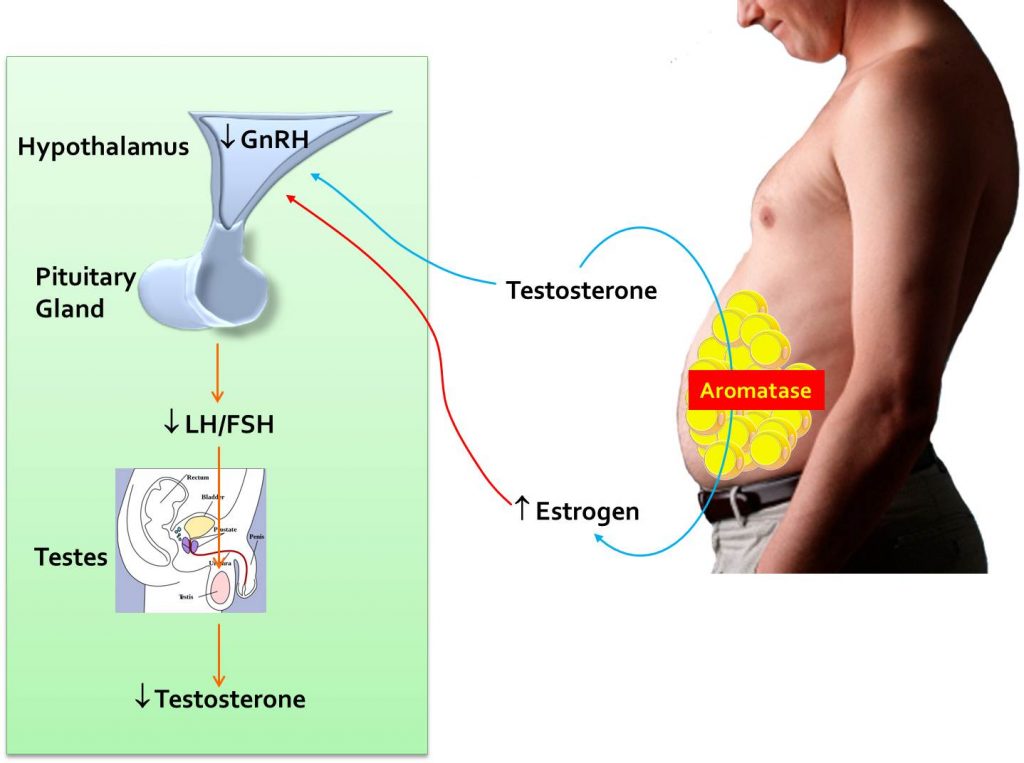
Aromatase converts testosterone to estradiol in men. High aromatase activity reduces available testosterone while raising estrogen levels.
What Is Aromatase?
Aromatase (also called the enzyme CYP19A1) is found in fat tissue, the liver, the brain, and the testes. Its job is to convert androgens — primarily testosterone — into estrogens, primarily estradiol (E2). This conversion is called aromatization.
This process is completely normal and necessary. Men need estradiol for bone density, cardiovascular health, libido, mood, and brain function. The problem occurs when aromatase activity is too high, converting too much testosterone into estrogen and leaving less testosterone available for the body to use.
Why Estradiol Matters More Than Most Doctors Acknowledge
Most primary care doctors check total testosterone and stop there. But estradiol is equally important — and often the key to understanding why a man feels the way he does.
At Revive Low T Clinic, we run a 51-biomarker panel that includes total testosterone, free testosterone, estradiol, SHBG, LH, FSH, and full metabolic markers. Most clinics run 2–4 tests. You can't optimize what you're not measuring.
Signs of High Estradiol in Men
- Gynecomastia (breast tissue development)
- Water retention and bloating
- Mood swings, irritability, emotional sensitivity
- Low libido despite normal or high testosterone
- Difficulty losing body fat (especially around the midsection)
- Fatigue and low energy
- Reduced morning erections
Signs of Low Estradiol in Men
- Joint pain and stiffness
- Low bone density
- Depression and mood disturbances
- Low libido (yes — too low estradiol also reduces libido)
- Hot flashes (less common but possible)
- Cognitive issues, poor memory
The Aromatase–Testosterone Feedback Loop
Your brain constantly monitors hormone levels in the bloodstream. The hypothalamus and pituitary gland act like a thermostat — when they detect enough testosterone and estradiol, they reduce the signal (LH) to the testes to slow testosterone production.
When aromatase activity is high, more testosterone gets converted to estradiol. The brain senses high estradiol and suppresses LH production. The testes produce less testosterone. Testosterone drops further. This creates a cycle that compounds over time — especially in men with excess body fat, which is one of the primary sites of aromatase activity.
Why Obesity Increases Aromatase Activity
Adipose (fat) tissue contains high concentrations of aromatase. The more body fat a man carries — particularly visceral fat around the abdomen — the more aromatase activity he has, and the more testosterone gets converted to estrogen. This is why obesity and low testosterone are closely linked, and why weight loss is often a meaningful part of optimizing testosterone levels.
Conversely, testosterone therapy combined with exercise can reduce body fat, which in turn reduces aromatase activity — creating a positive feedback loop that improves long-term health.
Aromatase and TRT — What Changes When You Start Therapy
When men start testosterone replacement therapy, total testosterone levels rise. Aromatase converts a portion of that additional testosterone into estradiol — so estradiol levels also rise. In most men this is fine, and estradiol stays within a healthy range. In some men (typically those with higher body fat, genetic predisposition, or other factors), estradiol rises too high.
This is why monitoring estradiol on TRT is essential — not optional. A provider who only tracks total testosterone is missing a critical piece of the picture. At Revive, we check estradiol at baseline and at every follow-up to make sure it stays in the optimal range.
Managing Estradiol on TRT
If estradiol rises too high during TRT, there are several approaches:
- Dose adjustment: Reducing the testosterone dose reduces aromatization
- Injection frequency: More frequent, smaller injections can produce steadier levels with less peak aromatization
- Aromatase inhibitors (AIs): Medications like anastrozole block aromatase activity. They are effective but require careful dosing — over-suppressing estradiol causes its own set of problems
- Body composition improvements: Losing fat reduces aromatase activity naturally
What Optimal Estradiol Looks Like on Lab Testing
There is debate in the medical community about the "ideal" estradiol range for men on TRT. At Revive, we look at estradiol in the context of total testosterone — the ratio matters more than the absolute number. Most men feel best with estradiol (sensitive assay) between 20–40 pg/mL, but some men tolerate higher levels well while others need to be at the lower end of the range.
Symptoms matter more than numbers. A man with estradiol of 45 and no symptoms may not need intervention. A man with estradiol of 32 but experiencing joint pain and low libido may benefit from optimization. We treat the patient, not the lab value.
Can You Naturally Reduce Aromatase Activity?
Yes — several lifestyle interventions can meaningfully reduce aromatase activity:
- Losing body fat — the single most impactful change for most men
- Resistance training — builds muscle, burns fat, directly improves testosterone-to-estrogen ratio
- Reducing alcohol — alcohol increases aromatase activity and is directly toxic to testicular function
- Zinc — has mild aromatase inhibitor properties; common in men with low testosterone
- Managing insulin resistance — metabolic syndrome drives aromatase activity
Get Your Estradiol and Testosterone Tested
Start with a free phone consult. Your first visit includes a doctor consultation and a 51-biomarker panel — testosterone, free testosterone, estradiol, SHBG, LH, FSH, and more. Most clinics run 2 tests. We run 51. See the full picture.
Free Consult →Kirkland · Seattle · Federal Way · Telehealth